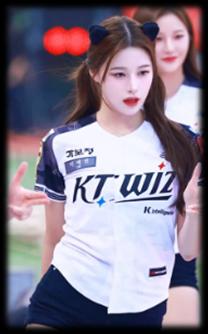
Walk into any KBO stadium on game night and you'll immediately understand why Korean baseball cheerleading has become a global phenomenon. The stands aren't passive — they're an active performance space, with synchronized crowd dances, call-and-response chants, and a wall of organized enthusiasm that transforms ordinary sporting events into something closer to a festival.
More Than Just Sideline Entertainment
In American baseball, cheerleaders don't exist. In Japanese baseball, they're present but typically stationed quietly along the baselines. Korean baseball invented something entirely different: a dedicated, highly trained performance unit positioned in front of the outfield stands, working in constant dialogue with thousands of fans who know exactly what to do next.
Every team in the KBO has its own squad. Every squad has its own identity, its own uniform palette, its own repertoire of team-specific chants and choreography. Attending your first KBO game feels like arriving at a performance you didn't know you had a role in — and realizing halfway through that you've been doing your part all along.
The Performer's Role
KBO cheerleaders aren't decorative. They're the crowd's musical conductors — signaling when to chant, when to clap, when to wave rally towels, when to sit down and save energy for the moment that matters. It requires a deep understanding of game flow, crowd psychology, and physical endurance across a 162-game season that runs from March to October.
Top performers like Kim Hae-ri (547K Instagram followers) and Lee Ye-bin (268K) have developed followings that extend far beyond baseball fans — drawing in audiences who primarily follow them for the performance art rather than the sport itself.
Why International Fans Are Paying Attention
The global spread of KBO cheerleader content began in earnest during the 2020 COVID season, when KBO was one of the first leagues to resume with empty stadiums. International viewers watching KBO broadcasts — including audiences in the United States and Europe encountering the league for the first time — discovered the cheerleader performances via broadcast cutaways and clip sharing.
Japanese and Taiwanese fans, already culturally adjacent to Korean entertainment through K-pop and Korean drama, embraced KBO cheerleaders particularly enthusiastically. Korean performers' combination of dance quality, energy, and physical presence translates perfectly to screen — and the clip culture of platforms like Instagram and TikTok has spread individual moments to audiences who will never attend a KBO game in person.
KOLEX: The Vanguard
KOLEX Sports Entertainment represents the current standard-bearer for this tradition. With 12 performers spanning baseball, basketball, and volleyball — each bringing individual star power to a collectively exceptional squad — KOLEX is what the genre looks like when every element is operating at its best.